
The other report on the real Mexico
What 8 years did to your table, your debt and your streets, measured with official figures
Today the President delivers her second annual report. This is the report Palacio will not read: what your money bought in 2018, what it buys today, how much debt every Mexican carries, and how many are no longer here to listen. Every figure has a source. Every source is official. You draw the conclusion.
¿Quieres ser socio de cashback de esta semana y ganar 40% de lo que se recaude?Do you want to be this week cashback partner and earn 40% of what is recovered?
Two reports on the same country
Today you will hear a report full of rising percentages. This site is the mirror: the percentages rising on you. No adjectives. INEGI prices, Treasury debt, the government's own disappearance registry and Bank of Mexico remittances. This house has one rule: no figure without a source.
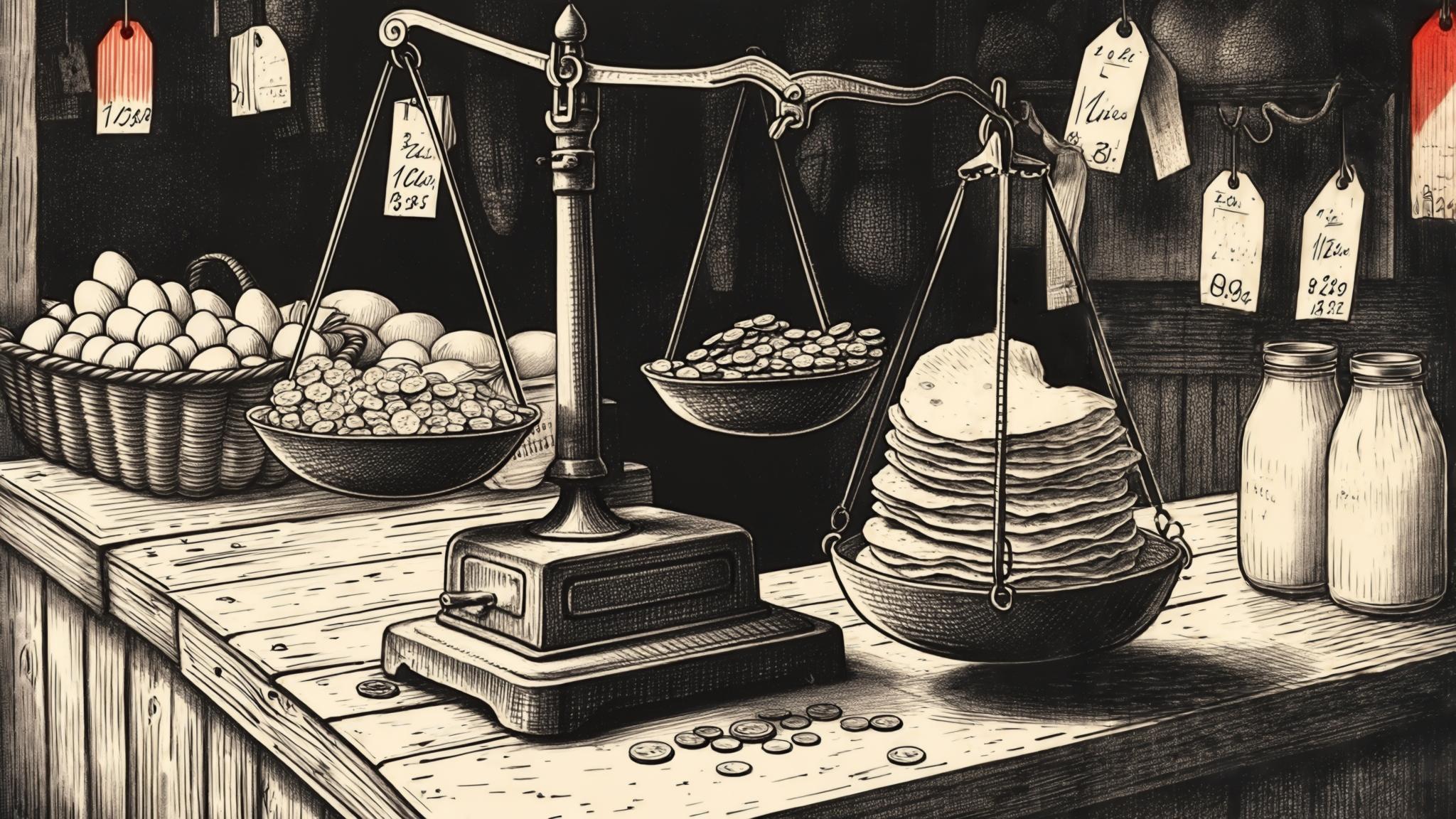
The most honest way to measure 8 years is not the speech: it is the grocery run. That is why this special starts at the market, moves to your paycheck, passes through the debt you never signed but still owe, and ends with the two figures no report ever brags about: the disappeared and the ones who left.
Use the calculators. Move the numbers. They are yours.
How much does your 2018 money buy today?
Start with Mexico's most famous bill: 100 pesos. In July 2018, INEGI's consumer price index stood at exactly 100. In July 2026 it stands at 145.17. Translation without economists: to buy what 100 pesos bought 8 years ago, today you need 145 pesos and 17 cents.
The figure Palacio will repeat today, in full
Let us be exact, because exactness is what Palacio does not expect from its critics. The minimum wage did rise, a lot: from $88.36 a day in 2018 to $315.04 in 2026, by decree published in the Official Gazette. It is the report's star indicator and it is real. This site does not deny it: it places it next to the rest.
Because a country does not live on the minimum wage. It lives on what your paycheck, yours, buys at the tortilla shop, the pharmacy and the rent. And there the CPI is merciless: every 2018 peso is worth 69 cents today. Test it with your own salary:
Three speeds of the same country, sourced: the minimum wage rose 257% nominal (CONASAMI). General prices rose 45% (INEGI). Tortillas rose 61% (INEGI). Whoever earns exactly the minimum came out ahead of tortillas. The question the report does not answer: do you earn the minimum? And did your salary rise 45% since 2018? If not, you are poorer than 8 years ago. No adjectives. By arithmetic.
If your salary did not rise 45% since 2018, you are poorer than 8 years ago. By arithmetic.
The prescription the State never filled
The promise was a health system like Denmark. The record says otherwise: in 2023 alone, 7,503,818 prescriptions went unfilled in public hospitals and institutes. Between 2021 and 2023 the total reached 14.7 million unfilled prescriptions, documented by the Cero Desabasto collective. And patient reports keep coming in 2026.
When the State does not deliver, you pay. Out-of-pocket spending on medicine grew 116% between 2018 and 2024: from 222 to 480 pesos per quarter per household on average, per INEGI's ENIGH survey. And 1.11 million households fell into catastrophic health spending: more than 30% of their capacity to pay went to getting well.
The shortage is not a statistic. It is a family buying at the pharmacy what it already paid for in taxes.
The country where the minimum wage misses half the people
Here is the key that connects this whole report. The minimum wage rose, true. But the minimum is a right for those with an employer, a contract and social security. In July 2026, labor informality stood at 55%: more than half of working Mexicans do so with no social security, no formal employer and no guaranteed minimum wage, per INEGI's ENOE survey.
That is why the speech and the grocery bill do not match. The report's star indicator protects part of the country. Inflation, on the other hand, is paid by all. The informal 55% received the full increase in tortillas, milk and eggs. From the minimum wage increase they received whatever their informal employer chose to give: sometimes something, often nothing.
Half of Mexico works outside the only indicator Palacio brags about.
What you owe without ever signing
In December 2018, Mexico public debt in its broadest measure was 10.55 trillion pesos, per the Treasury. As of June 2026 it is 19.05 trillion: 51 of every 100 pesos the country produces in a year. In 8 years, the balance nearly doubled. And the speech of these 8 years was: we do not borrow like the neoliberals.
Every baby born in Mexico today is born owing 145 thousand pesos. They never asked for it. They never saw it. They will pay it in taxes, in interest and in the public spending that will no longer stretch: debt service already exceeds, since 2015, all public education spending, per CIEP.
The line item no report ever brags about
The national registry of missing persons reached 135,048 cases on June 16, 2026. Of that entire historical registry, which starts in 1952, 58% is concentrated between 2018 and 2026: around 78 thousand people disappeared during the 8 years of this political project. It is the most honest statistic of the period because no adversary produces it: the State itself does.
In 2025 alone, 12,373 disappearances were registered. That is 34 people every day. One every 42 minutes. While you read this chapter, the counter moved.
On homicides, full exactness, because this site hides nothing from you: the 2018-2024 term closed with 188,986 victims of intentional homicide, the largest total on record. The current administration had added some 39 thousand more victims by the first four months of 2026. In total, more than 228 thousand homicides in 8 years. And yes: homicide has been falling steadily in 2025 and 2026, down 41.7% from January to July versus the prior year per the security secretariat. That figure is real and you will hear it today. What you will not hear is the one above: disappearances are not falling. Twelve thousand a year, year after year. When homicides fall and disappearances do not, the open question is where the bodies that are no longer counted are going.
Homicides are falling. Disappearances are not. The question is where the bodies that are no longer counted went.
The record that comes with fine print
Conceded, because this site concedes what is true: 2025 was a record year for tourism. 47.8 million international tourists came in and total visitor spending left 34.9 billion dollars in foreign currency, 10.2% more than the year before, per INEGI. You will hear that figure today, and it is real.
The fine print is also INEGI's: the tourist who arrives by plane, the one who spends the most, fell 1.3% in 2025. And average spending per traveler dropped. Translation: Mexico is gaining pass-through and cruise visitors and losing the airborne tourist who fills hotels, restaurants and entire cities. The record is about quantity. Quality is moving the other way.
And the dollars that actually sustain households are not the tourist's: they are the 62 billion in remittances in the next chapter. Those are the ones shrinking.
The country propped up by shrinking checks
For 8 years, the silent cushion of Mexican household economics was remittances: the money of those who left. In 2025 that cushion shrank for the first time in more than a decade: from 64,746 million dollars in 2024 to 61,791 million, a 4.5% drop, the deepest since 2009, per the Bank of Mexico.
Behind the money are the people. CEMLA documents a reduction of nearly one million working-age Mexicans in the United States in barely a year, between deportations and returns. More than 100 thousand Mexicans were deported in the first 10 months of the migration offensive: half of all Latin American deportations. Many had spent decades working there and sending money here.
Read it whole: the model of these 8 years bragged that the popular economy was better off, while a growing share of that improvement was paid for by 12 million Mexicans who had to leave and produce it in another country. That subsidy is closing. And no social program replaces 62 billion dollars a year.
What she said, and the other page
Today's report did not lie in its figures. It lied in what it left out of each figure. This rebuttal uses no adjectives: it uses the full bulletin of the very source Palacio cited. Twelve verbatim claims, twelve real figures, twelve sources.
"149 billion pesos more so far in 2026. Record federal revenue of 6.046 trillion."
The SAT itself reported that tax collection grew 0.4% in real terms through the first half. The 149 billion is almost entirely inflation. In 2025 it grew 6.4% real; in 2026, 0.4%. What is truly rising are consumption taxes: VAT +115,196 million and IEPS +31,864 million in the half, with gasoline paying the full IEPS since April 2025.
"From 2,800 pesos a month in 2018 to 9,282 in 2026: a real increase of 154%."
True and conceded. But 154% is the decree's percentage, not life's. Real labor income per person rose 7.4% in the last year. Labor income per capita is 3,653 pesos a month: 120 pesos a day, with milk at 29.92 and tortillas at 24.20. And 55% work informally, where the decree does not apply; informality rose versus last year.
"At its lowest level since 2005."
Labor poverty measures whether income covers the food basket: eating. The record low means 40.3 million Mexicans still do not earn enough from work to eat. With the same data, 60% of the population cannot afford the full basket; in eight states it exceeds 70%; Chiapas, 83.7%. And the low (30.7%) was the first quarter: the second-quarter update puts it at 31.9%, already heading back up.
"Average formal wage reached 20,212 pesos, a record. 22.8 million formal jobs."
That average covers only formal workers: 22.8 million out of 59.6 million employed. It is the wage of 38% of the country. The other 62% is absent from the figure. And the income gain is attributed to the decree and social programs, not new formal jobs, which stalled in 2025.
"2.7%, second lowest in the OECD after Japan."
Mexico has no unemployment because it has informality. Whoever loses a formal job is not counted as unemployed: they sell on the street or drive for an app, and the ENOE counts them as employed. A country with 55% informality does not compete with Japan on jobs; it competes on how unemployment is disguised.
"Reform to reach a 40-hour work week by 2030."
The legal work week applies to those with a contract. 55% of workers have none. The reform reaches less than half of the working country.
"Current spending cut by 200 billion. An economy that serves the people is only achieved with austerity."
Austerity does not show in the debt: from 10.55 trillion at the end of 2018 to 19.05 trillion in June 2026, 51% of GDP. 145 thousand pesos per Mexican. Debt service, 4.1 trillion in 2026, exceeds all public education spending. They saved 200 billion in current spending and pay 4.1 trillion in interest.
"51.1 million international travelers in the half, +7.7%. 6.6 million by cruise, +15.2%."
Travelers are not tourists: the figure includes border and cruise day-trippers. The tourist who arrives by plane, the one who fills hotels and cities, fell 1.3% in 2025 and average spending per traveler dropped. The record is volume; quality is moving the other way.
"Strength of the peso, around 17 per dollar."
The strong peso has a loser the report did not name: families receiving remittances. They fell for the first time in 12 years, from 64,746 to 61,791 million dollars, and every dollar now buys fewer pesos. A double hit. Behind it: one million fewer Mexicans working in the U.S. in a year.
"Specialty consultations +106% versus 2022. 33 new hospitals, 650 operating rooms."
Hospitals get counted; so do prescriptions. 7,503,818 prescriptions unfilled in 2023 alone; 14.7 million between 2021 and 2023. When the State does not deliver, the family pays: out-of-pocket medicine spending +116% between 2018 and 2024; 1.11 million households in catastrophic spending.
"Homicides are falling steadily."
True and conceded: -41.7% from January to July 2026. What was not said: disappearances are not falling. 12,632 in 2024; 12,373 in 2025; 34 every day. 135,048 in the registry and 58% of the entire historical total concentrated between 2018 and 2026.
"Mexico is nobody's pinata. We accept no interference."
While the speech rejects interference, the agenda moves. On August 26, behind closed doors in Washington, concrete demands were set on Sinaloa, handover of cases and customs; the next day the first case file fell. Sovereignty is declared at the Palace; it is negotiated in Washington.
Save this page next to the speech
This site asked you to believe no one. It showed you INEGI's CPI, the Treasury's debt, the government's own registry of the missing, the Bank of Mexico's remittances and the minimum wage decree in the Official Gazette. It conceded what had to be conceded: the minimum wage truly rose and homicides are falling. And it measured the rest: your money buys 31% less, debt per head rose 72%, milk rose 74% and tortillas 61%, out-of-pocket medicine spending grew 116% while 7.5 million prescriptions went unfilled, 55% of the country works outside the minimum they brag about, 78 thousand people disappeared in 8 years and the northern check is shrinking for the first time in a decade.
Today they will tell you that you have never been better off. You now have the market, the calculator and the sources to answer with numbers, not shouting. Share it with whoever will watch the speech. The best fact-check is not a tweet: it is your own grocery run.